US Department of Justice
The US Department of Justice, often abbreviated as DOJ, is responsible for issuing rules for Title II (state and local government) and Title III (businesses and nonprofit organizations that are open to the public) of the Americans with Disabilities Act (ADA). The DOJ is also responsible for enforcing these rules, though the DOJ works on enforcement with several other federal agencies. For example, it works with the US Department of Education on education-related enforcement and the US Department of Transportation on transportation-related enforcement.
[ Read: How to File a Complaint ]
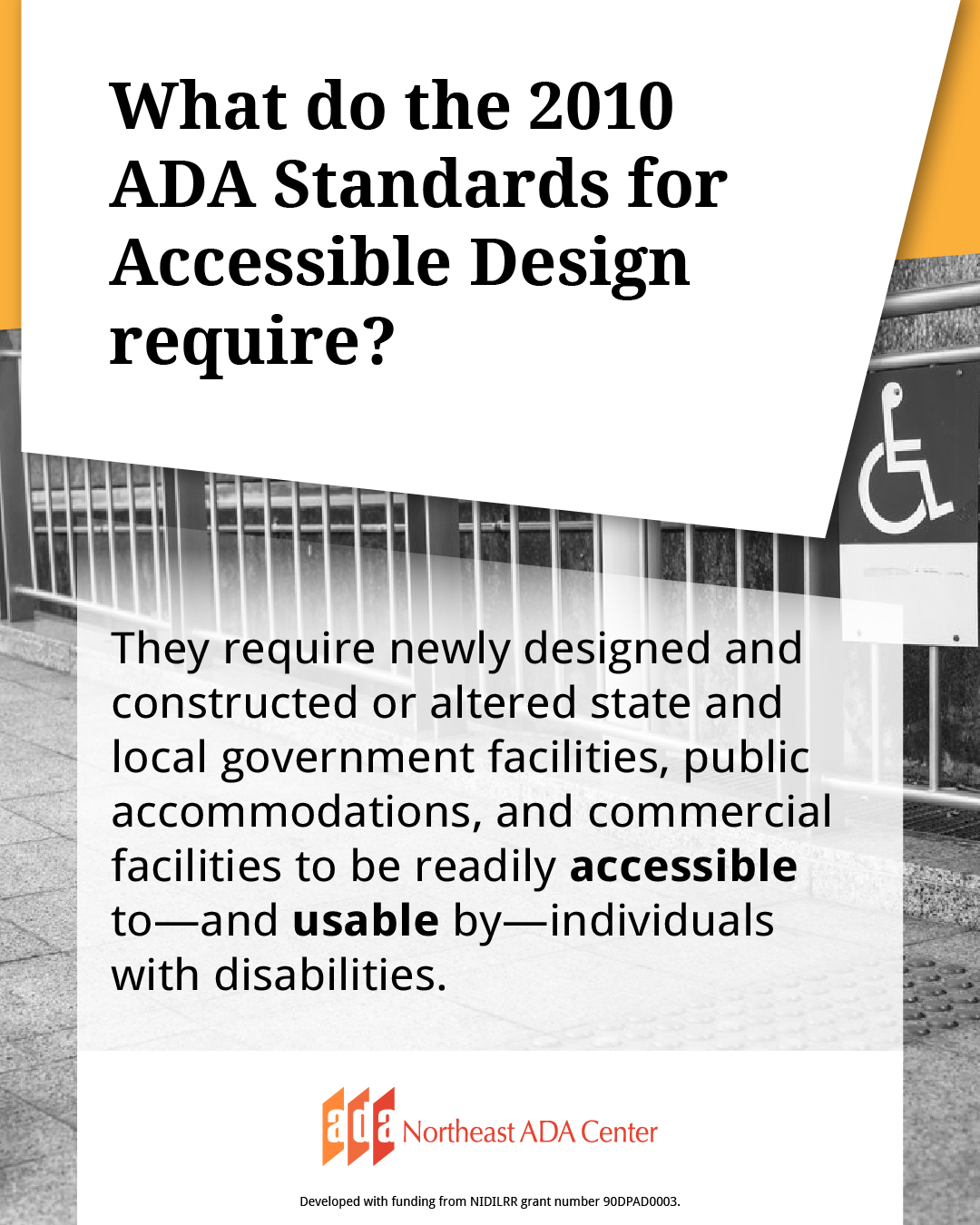
The DOJ has adopted the physical access requirements developed by the US Access Board. This made them enforceable under the ADA, and now they are known as the 2010 ADA Standards for Accessible Design.
Also, the Civil Rights Division of the DOJ has created a useful website, ADA.gov.
Related Resources
Articles
-
About the 2010 ADA Standards for Accessible Design
What's in the 2010 ADA Standards for Accessible Design? How do these standards relate to the America... -
Finding Disability Statistics
How to find disability-related data and statistics for New York, New Jersey, and Puerto Rico in the... -
The ADA and Facility Access Stakeholders
What facility access means in the context of the Americans with Disabilities Act (ADA), who is respo... -
The ADA and Employment Service Professionals
Learn about the role of the employment service professional in implementing ADA principles such as d... -
The ADA and Fixed-Route Buses
Info and easy how-to videos that explain the ADA regulations that ensure an accessible bus ride for...
Blogs
- What Accessibility Means to Me: Creating Opportunities
Cornell student Nina Leach shares how accessibility has made a difference in her life and her hopes... - Title II Website and Mobile Application Regulation Compliance Deadline Extended
Discusses the 2026 due-date extension for Title II public entities to comply with ADA-related regula... - New Website for Small Business Owners with Questions about Disability
The Small Business at Work website has expert advice about Americans with Disabilities Act (ADA) reg... - How common is disability among adults in the US? Understanding survey differences
Why is the prevalence of disability among adults in the United States different in two major surveys... - What the Northeast ADA Center Means to Me—Chris Sweet
I am proud to be a part of an organization that informs and brings positive change to people and fam...
Pages
- Tool 11 - Our Employee Resources: Disability Information, Contacts, and Services
Tips and templates for disability inclusiveness in the workplace. Tool 11: Our Employee Resources: D... - Tool 10 - Our Manager Resources: Disability Information, Contacts, and Services
Tips and templates for disability inclusiveness in the workplace. Tool 10: Our Manager Resources: Di... - Tool 9 - The Accommodation Process: Questions about Accommodation at Work
Tips and templates for disability inclusiveness in the workplace. Tool 9: The Accommodation Process:... - Tool 8 - Federal Contractors: Encouraging Employees to Self-Identify as a Person with a Disability
Tips and templates for disability inclusiveness in the workplace. Tool 8: Federal Contractors: Encou... - Tool 7 - Disclosing a Disability: When an Employee Tells Their Manager about a Disability
Tips and templates for disability inclusiveness in the workplace. Tool 7: Disclosing a Disability: W...
News
- January is Glaucoma Awareness Month
01/16/2019- January is National Glaucoma Awareness Month, an important time to spread the word about this sight-stealing disease. Currently, more than 3 million people in the United States have glaucoma. The Nati... - 508 Webinar: Open Q&A Session on the Revised 508 Standards
01/16/2019- Tuesday, January 29, 2019, 1:00 2:30 p.m. ET This webinar provides an opportunity for attendees to pose questions to the Access Board on the revised Section 508 Standards. The 508 Standards app... - Free Webinar - Effective Communication in the Criminal Justice System: Lessons from Case Law
01/16/2019- Thursday, January 24th, 201912:30 PM EST - 1:15 PM EST This is the second of a three-part series, ADA Lessons from Case Law, where the presenter will examine recent court cases as they pertain to dif... - Airline's Provision of Alternative Accessible Website Triggers Hefty Fine Under the Air Carrier Access Act
01/16/2019- In response to the onslaught of website accessibility lawsuits against public accommodations covered by Title III of the ADA, some website accessibility consulting companies have been promoting soluti... - University of Montana Research on ADA Has National Implications
01/16/2019- A research center at the University of Montana is brokering answers to contemporary questions about the federal Americans with Disabilities Act of 1990. The UM Rural Institute for Inclusive Communiti...
Webinars
- Introduction to the Service Animal Toolkit
07/27/2022- Do customers bring dogs into your business claiming they are service animals, emotional support animals, comfort dogs, or therapy dogs? Join Chris Sweet, technical assistant for the Northeast ADA Cent... - Northeast ADA Center Year in Review 2020
01/28/2021- While COVID-19 was certainly one of the largest stories of 2020, other ADA items of note happened as well. Join the technical assistance team of the Northeast ADA Center as they review the year 2020.... - ADA 101.2 Overview of Title I and Employment
04/26/2021- This webinar is the third in the Northeast ADA's ADA 101 series. Intended for those new to the Americans with Disabilities Act or for those wanting a refresher, this webinar will focus on the employme... - ADA 101.1 Defining Disability
03/26/2021- This presentation builds on the introduction to the Americans with Disabilities Act (ADA) given in the webinar ADA 101. Intended for those new to the ADA or for those wanting a refresher, this webinar...
Documents
- The ADA and Summer Camps: Three Things Parents Should Know
Find out how the rights of children with disabilities in summer camps are protected by the Americans... - Service Animals Under the ADA
Find out what a service animal is under the Americans with Disabilities Act (ADA) in this fact sheet... - Reasonable Accommodations in the Workplace
Learn about workplace reasonable accommodations, the interactive process, and employer responsibilit... - Disclosing a disability to employer
Must a job seeker disclose a disability at the time of hire? Learn about disclosure during hiring in... - Web and Mobile App Accessibility at Colleges and Universities
Read about Americans with Disabilities Act (ADA) and Rehabilitation Act accessibility requirements f...
Infographics
Infographics

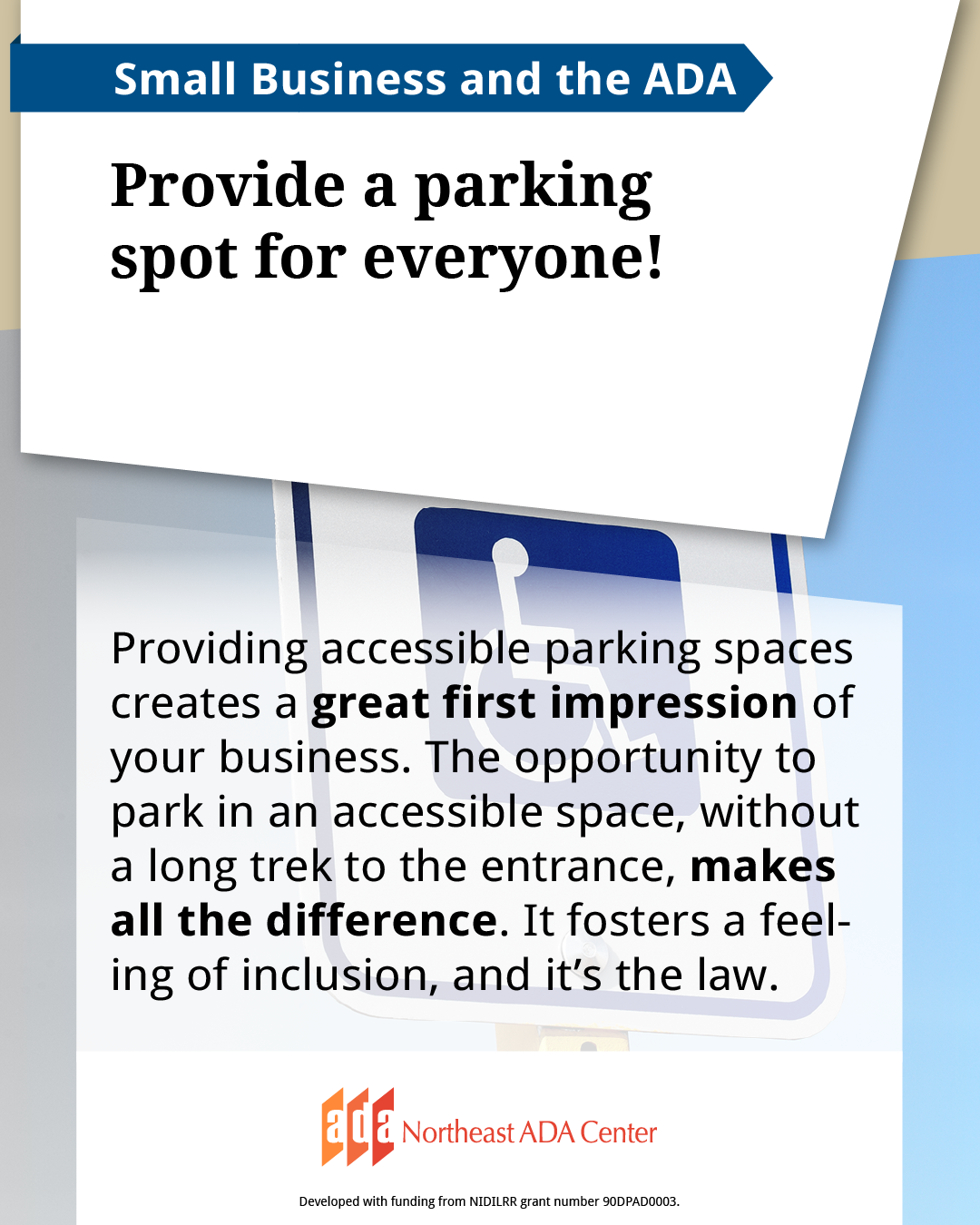
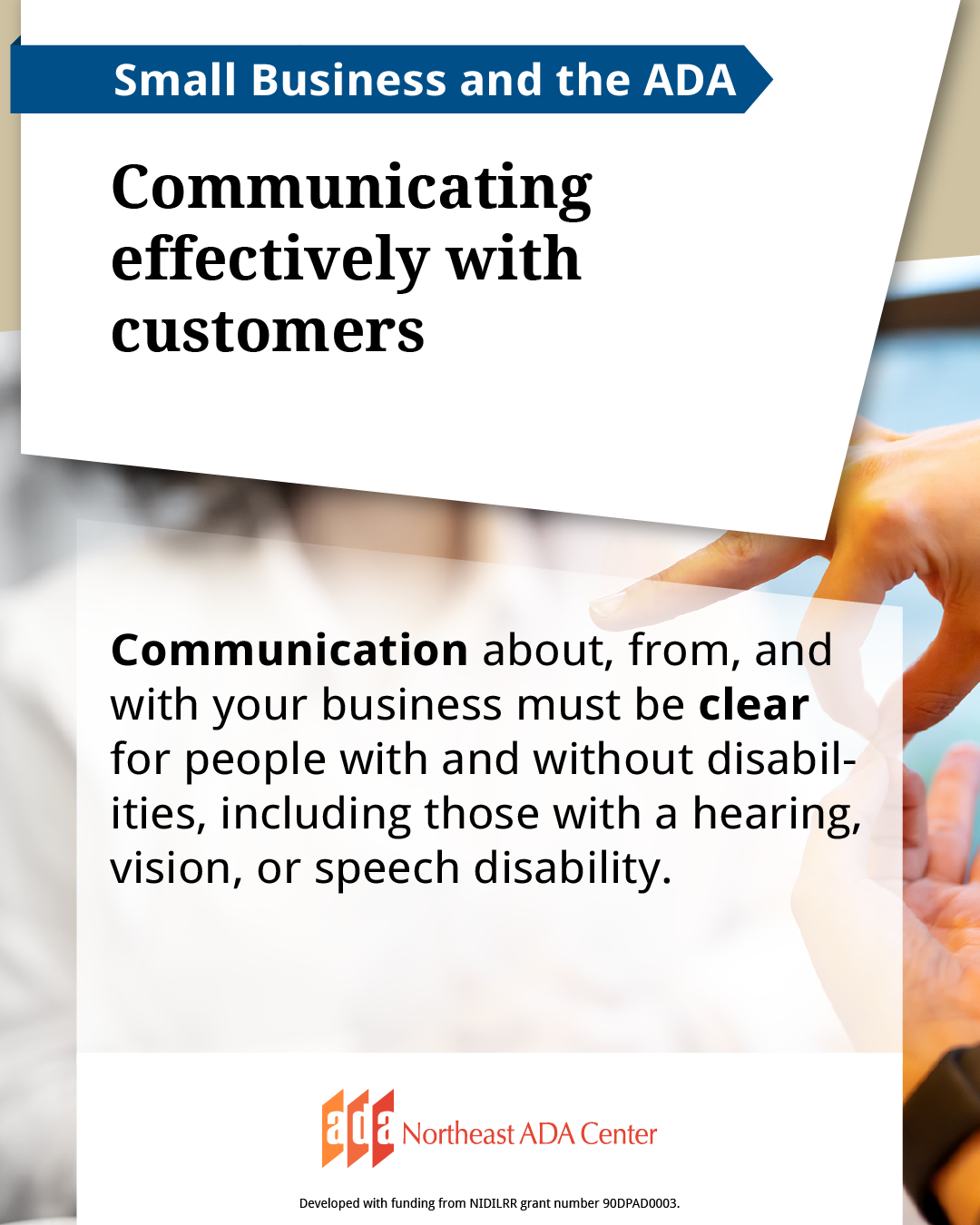
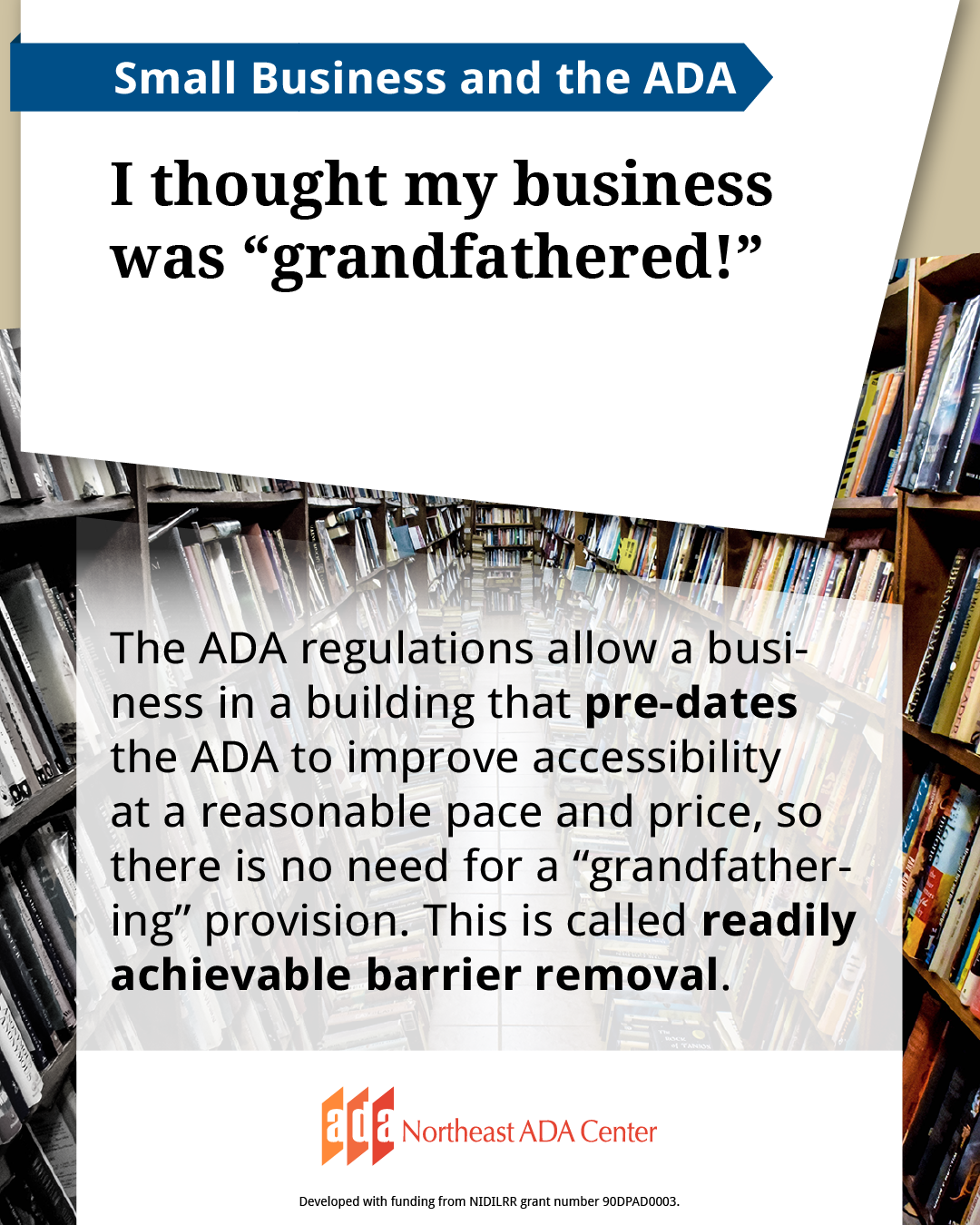
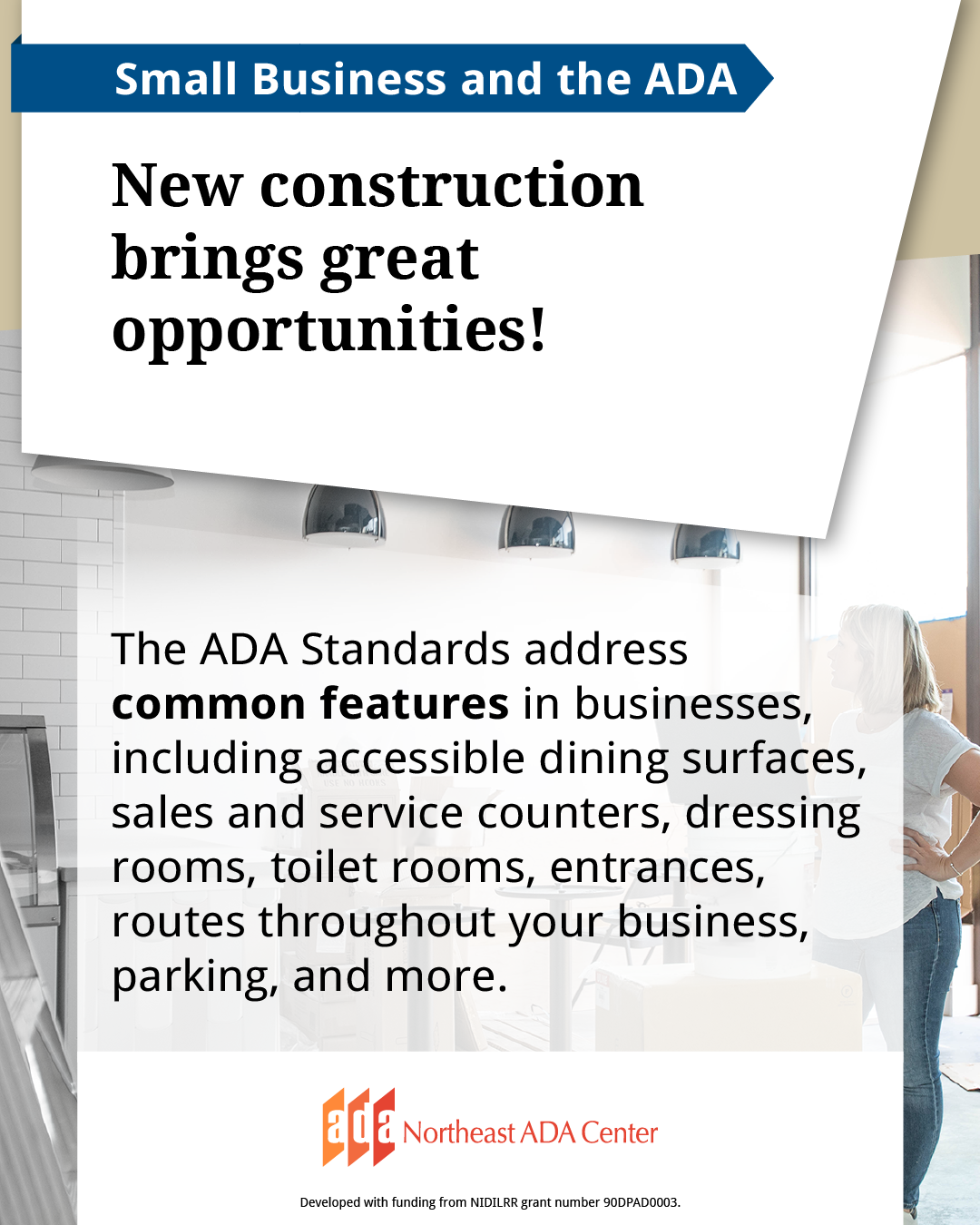
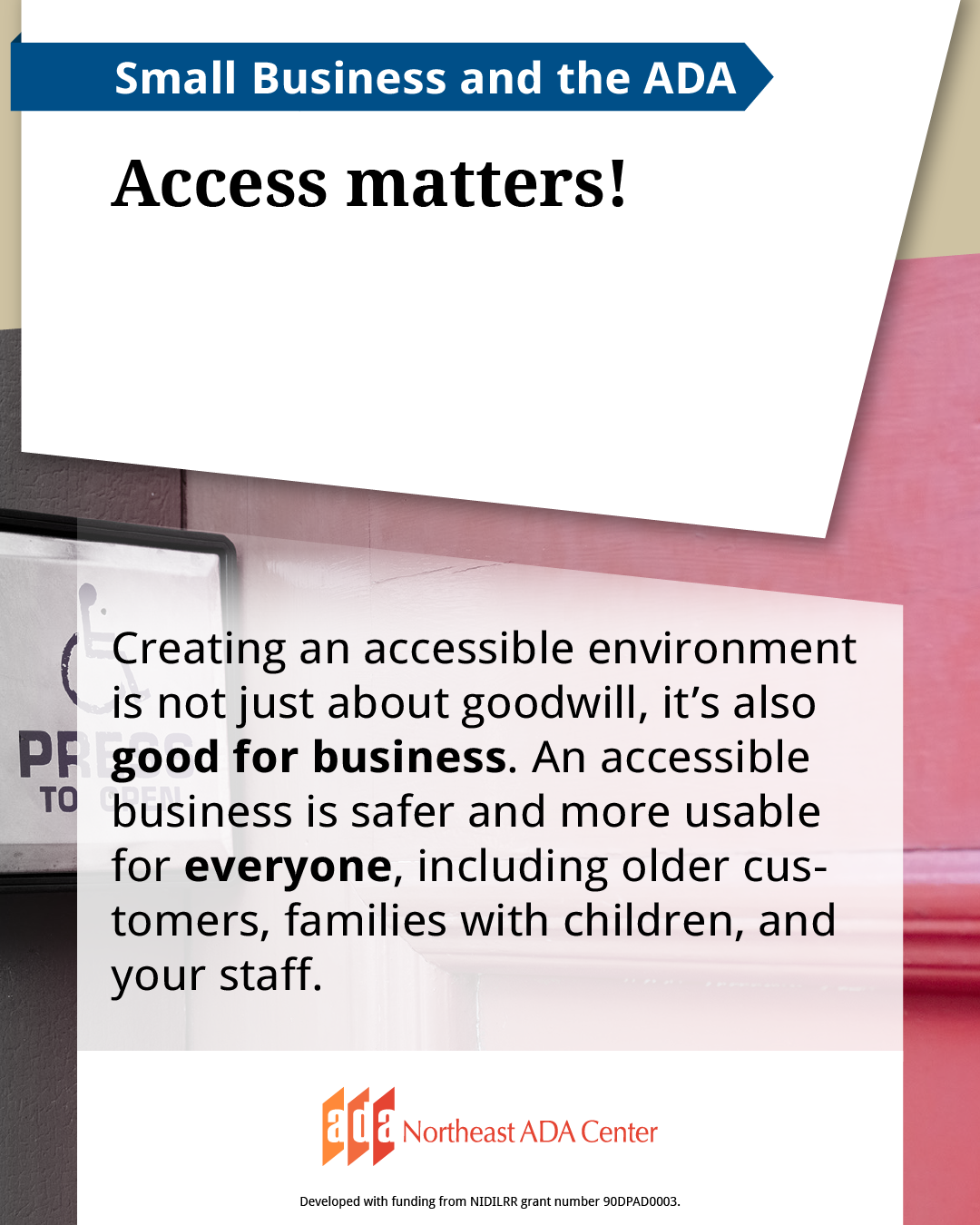
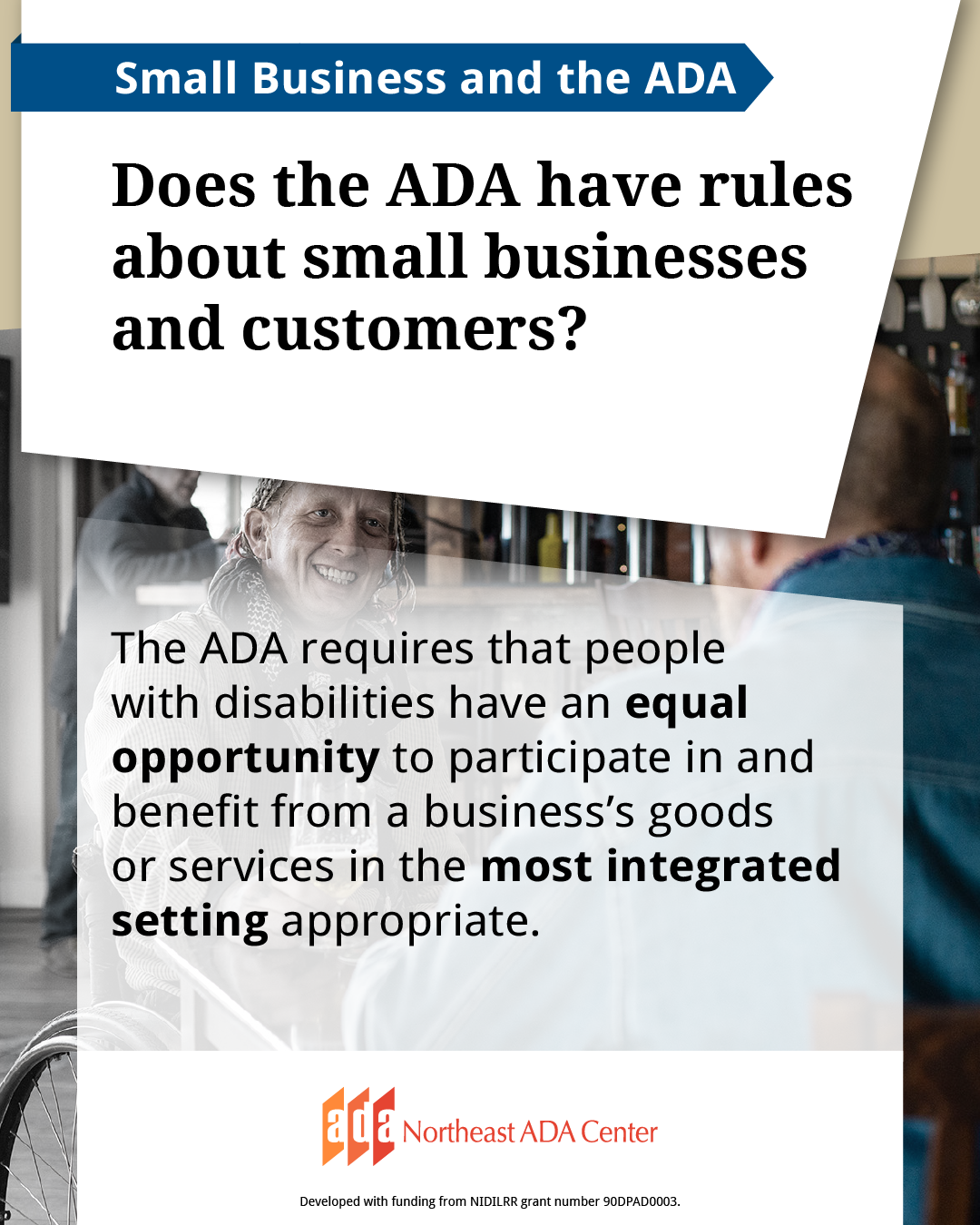
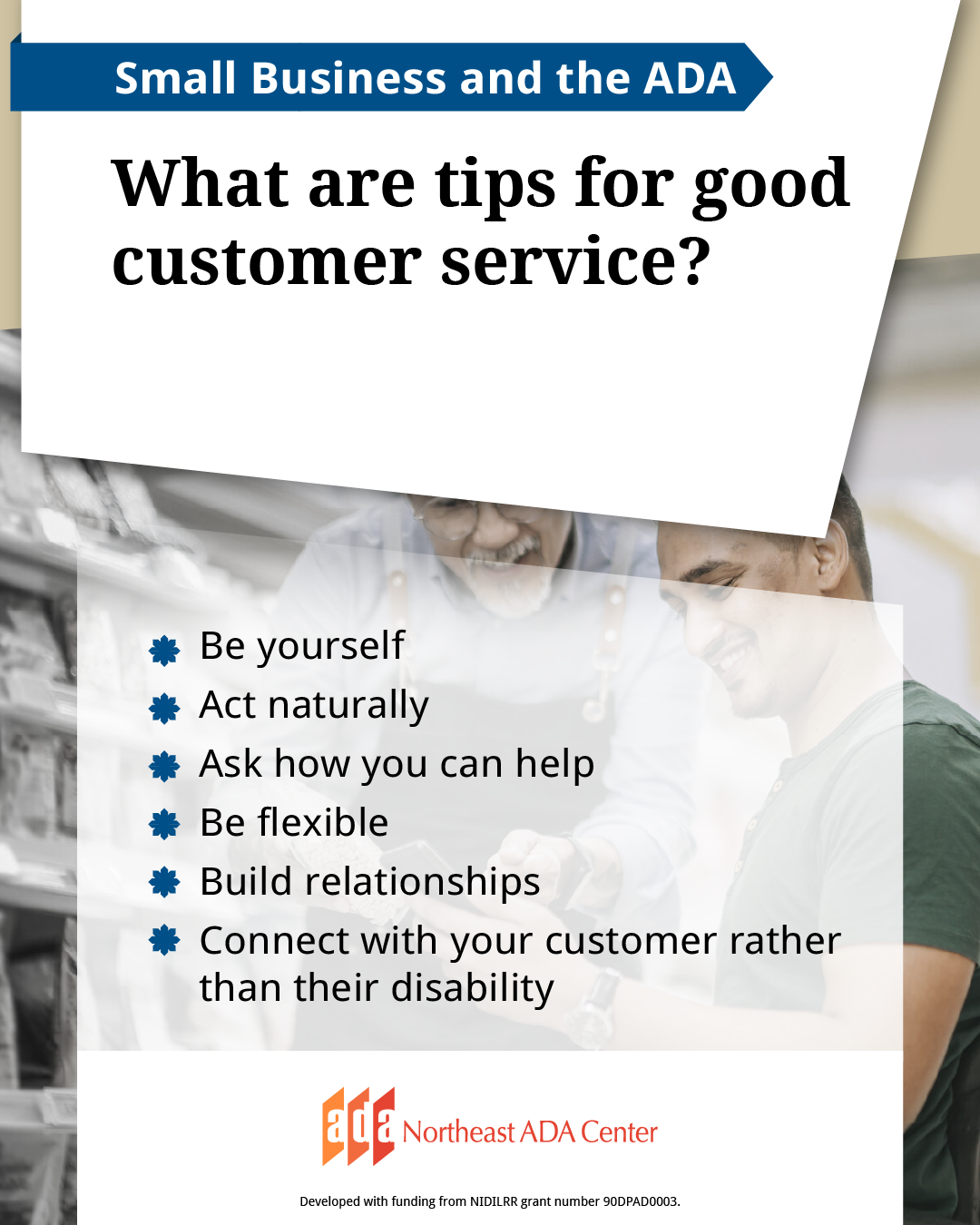
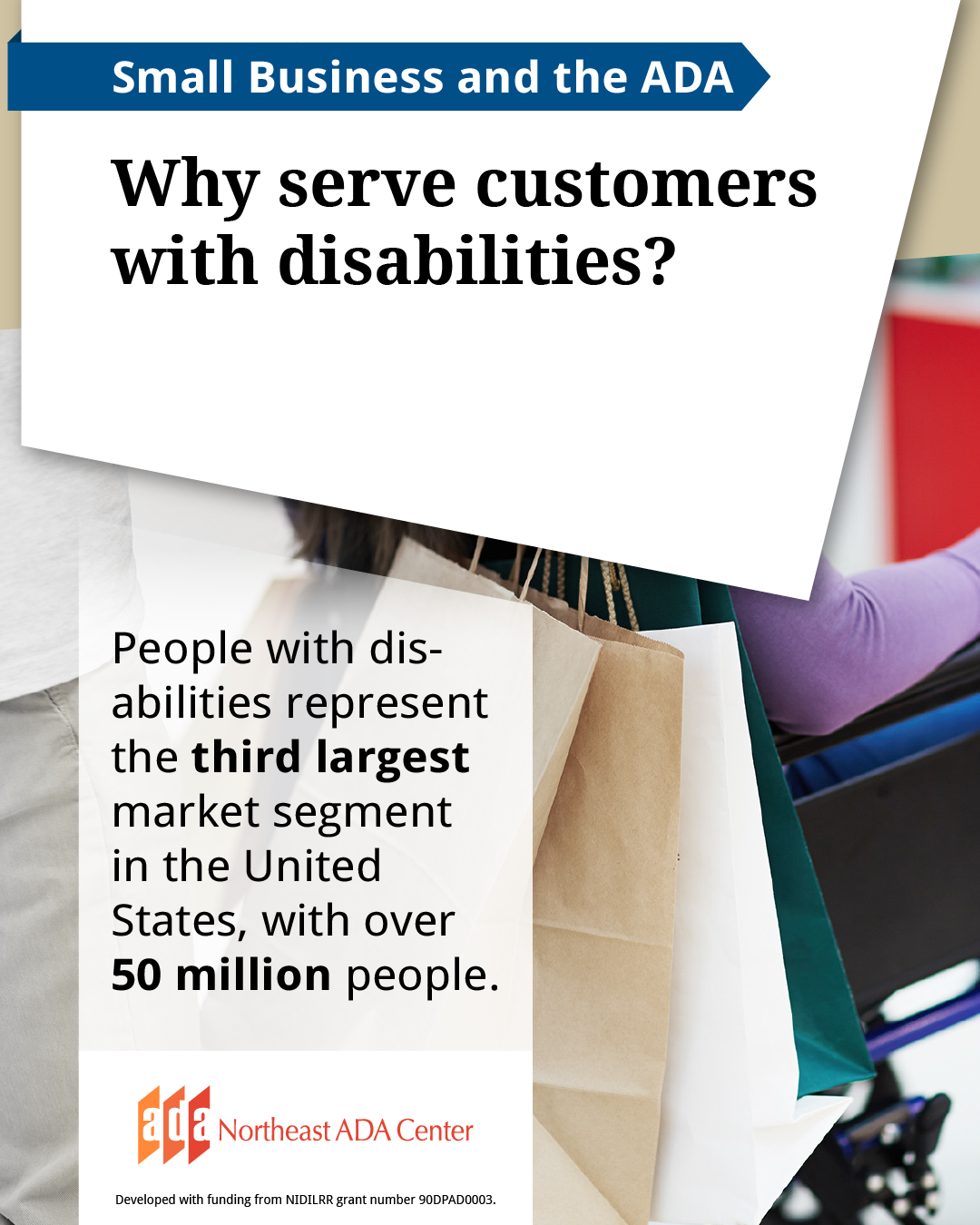




![Infographic showing a smiling person dressed business-casual. 4 out of 5 small businesses do not see the cost of accommodations as a barrier to employing people with disabilities. Note: For the purposes of this study, we define small business as employers having 15-500 employees. Source: William Erickson (Yang-Tan Institute, Cornell University) analysis of Cornell/SHRM Survey 2011, Private employers only. N=525
“We really wanted to make sure that the employee joined us. So, we did what we had to [to accommodate].” -Talent Acquisition & Human Resources Manager of a small information and technology company
Quote is from a set of interviews with small business representatives conducted by the Northeast ADA research team to investigate small business needs around ADA implementation.](https://s3.amazonaws.com/production-northeastada-org/local/en/IG-2018-04-30-Biz5.jpg)